Why modern tripmeters are redefining how drivers capture, interpret, and communicate the road ahead.
The Pursuit of Accuracy in Rally Note-Taking
In rallying, every meter matters. While drivers have always placed great emphasis on describing the radius of corners (even with curious analog or digital methods), the same level of precision is not always applied to distances. Approximations, habits, and rough estimates often find their way into the notes, yet these very gaps can change the rhythm, compromise the timing, and undermine a perfectly executed stage.
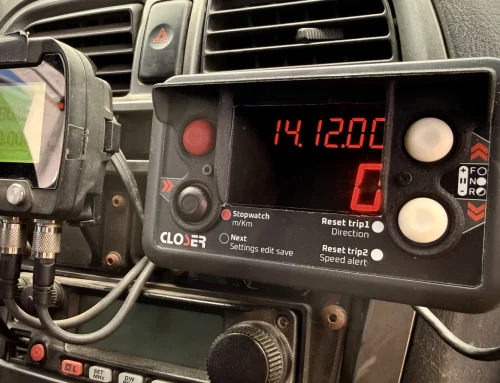
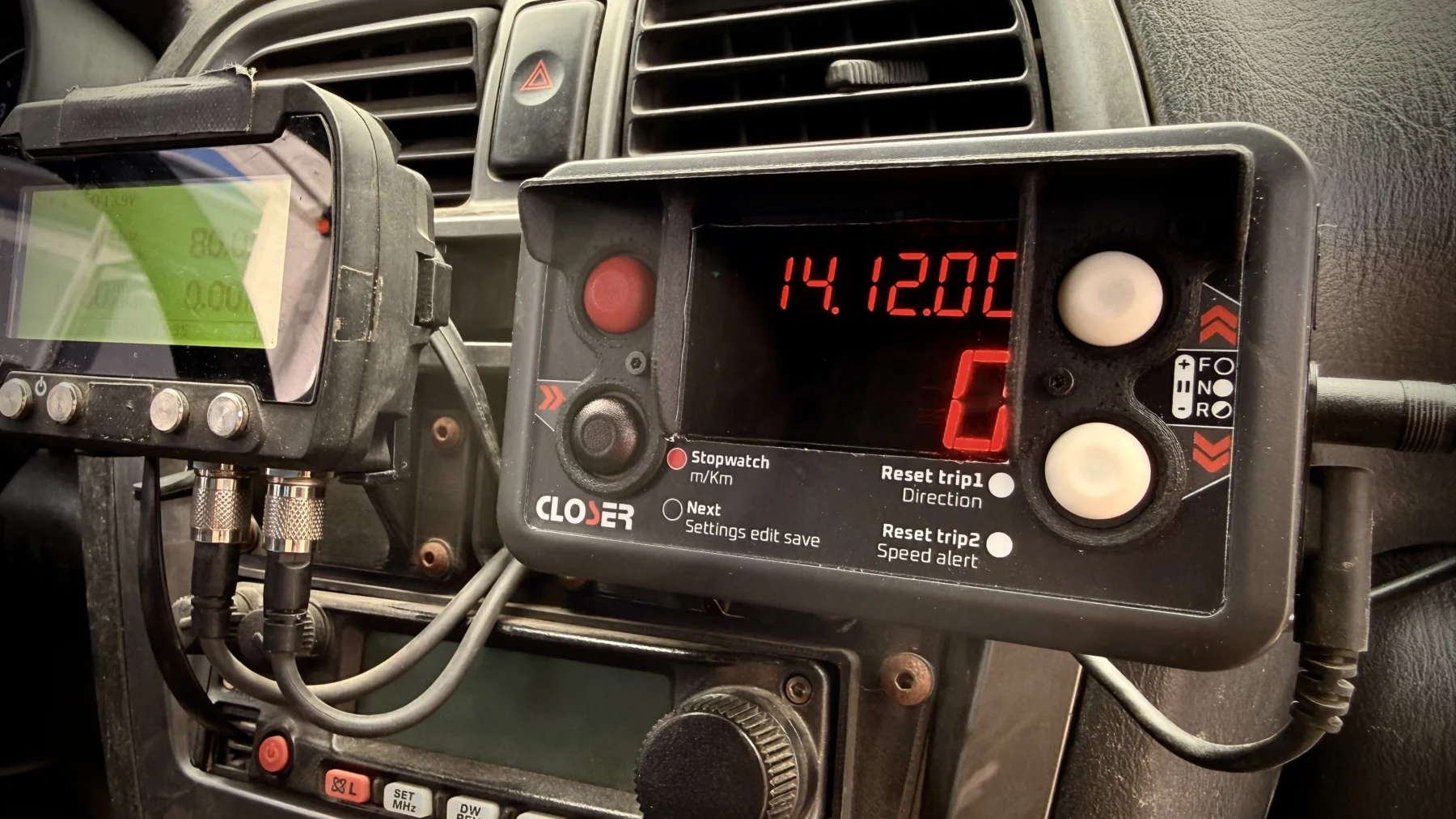
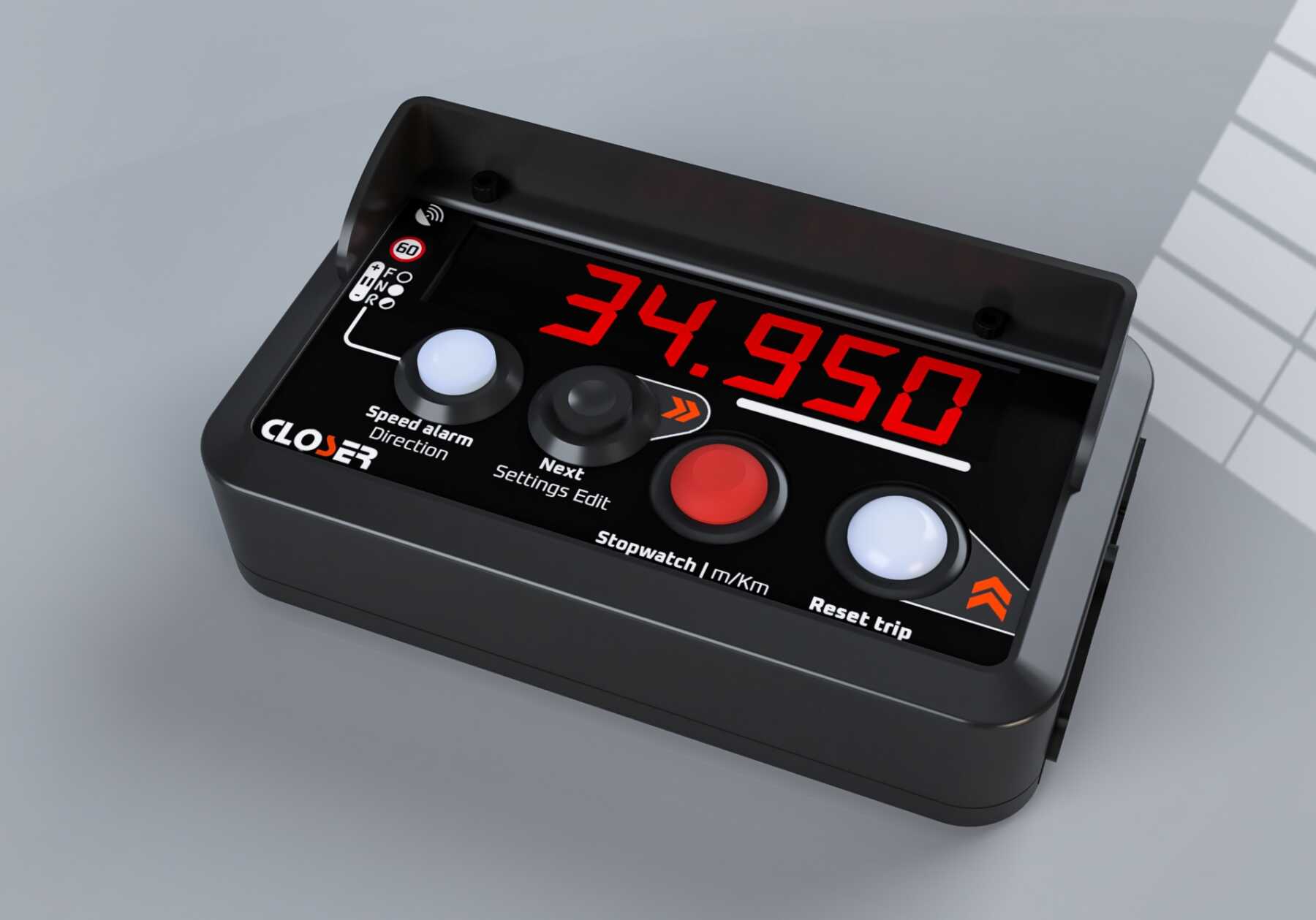
Today, advanced tripmeters allow teams to elevate their notes from “good enough” to “high-precision,” ensuring that every straight, every transition, and every hazard is measured and communicated with maximum clarity.
Defining Straight Sections Between Corners
One of the most underestimated elements in pace notes is the accuracy of the straight lines between bends. A tripmeter provides exact measurements, helping co-drivers describe whether a straight is truly short, a few car lengths, or long enough to build speed before the next instruction.
This precision avoids ambiguity and allows the driver to fully commit.
Adding Detail to Conjunctions to Manage Dangerous Transitions
Transitions, especially from fast to tight corners, are among the most delicate elements to communicate. A tripmeter enables the driver to define the true gap between two corners, helping identify potentially dangerous situations such as:
-
A high-speed corner followed by a sudden tightening
-
A deceptive straight that doesn’t allow enough space to brake
-
A combination where the rhythm changes abruptly
With accurate distances, the pace notes can express not only what comes next but also when it happens.
Specifying the Length of Long Corners
Long corners are rarely uniform, and knowing exactly how long they last makes a major difference in commitment and trajectory. With precise measurement, drivers can:
-
Indicate the exact length of the turn
-
Identify mid-corner changes in radius
-
Communicate whether the corner tightens, opens, or stays consistent
This allows the driver to maintain optimal speed and confidence from entry to exit.
Describing Distances After Jumps or Crests
Jumps and crests can dramatically reduce visibility. The landing zone may hide a corner, a braking point, or another hazard. Tripmeters deliver exact measurements of the distance after takeoff, allowing pace notes to clearly specify:
-
How far the landing is from the next instruction
-
Whether immediate braking is needed
-
If the car must stay centered or prepare for a direction change
Precision here directly improves safety and stage performance.
Locating Chicanes with Accuracy
Chicanes are often used to regulate speed in stages, but they can be unexpectedly placed or surrounded by limited reference points. Tripmeters help co-drivers pinpoint their exact location, reducing surprise and allowing the driver to prepare his pace notes with confidence.
Supporting Ouvreurs with a Clear and Consistent System
For teams using ouvreurs, having a precise and consistent measurement system is essential. A reliable tripmeter allows the opener crew to share information in a standardized format, ensuring that last-minute updates can be trusted and instantly integrated into the pace notes.
Conclusion: Precision Is Not an Option, It’s an Advantage
In the modern era of rallying, precision is a performance multiplier. Accurate distances transform pace notes into a more reliable, predictable, and actionable tool. With advanced tripmeters, co-drivers can elevate their craft, improve communication, and give drivers the confidence to push harder while staying safer.
In rallying, the difference between winning and losing often lies in the smallest details—and accurate distance measurement is one of them.