Why Dedicated Rally Tripmeter Still Makes the Difference
In recent years, smartphone applications have become increasingly popular in the rally world. For beginners and amateur crews, using a tripmeter app may seem like the simplest and most affordable solution. Modern smartphones are powerful, always available, and capable of running navigation software with surprising ease.
However, rallying is a demanding environment, and once precision, usability, and reliability become truly important, the limitations of smartphone-based solutions quickly start to appear. This is where a dedicated physical tripmeter still offers significant advantages over an app.
Remote Buttons and Better Usability
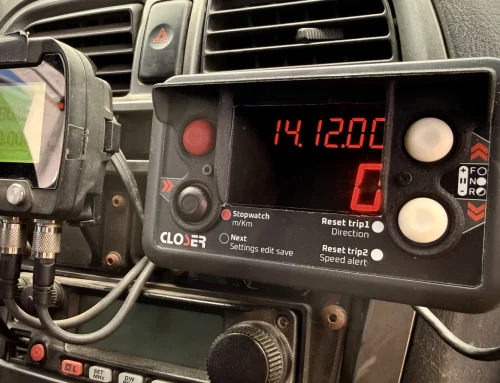
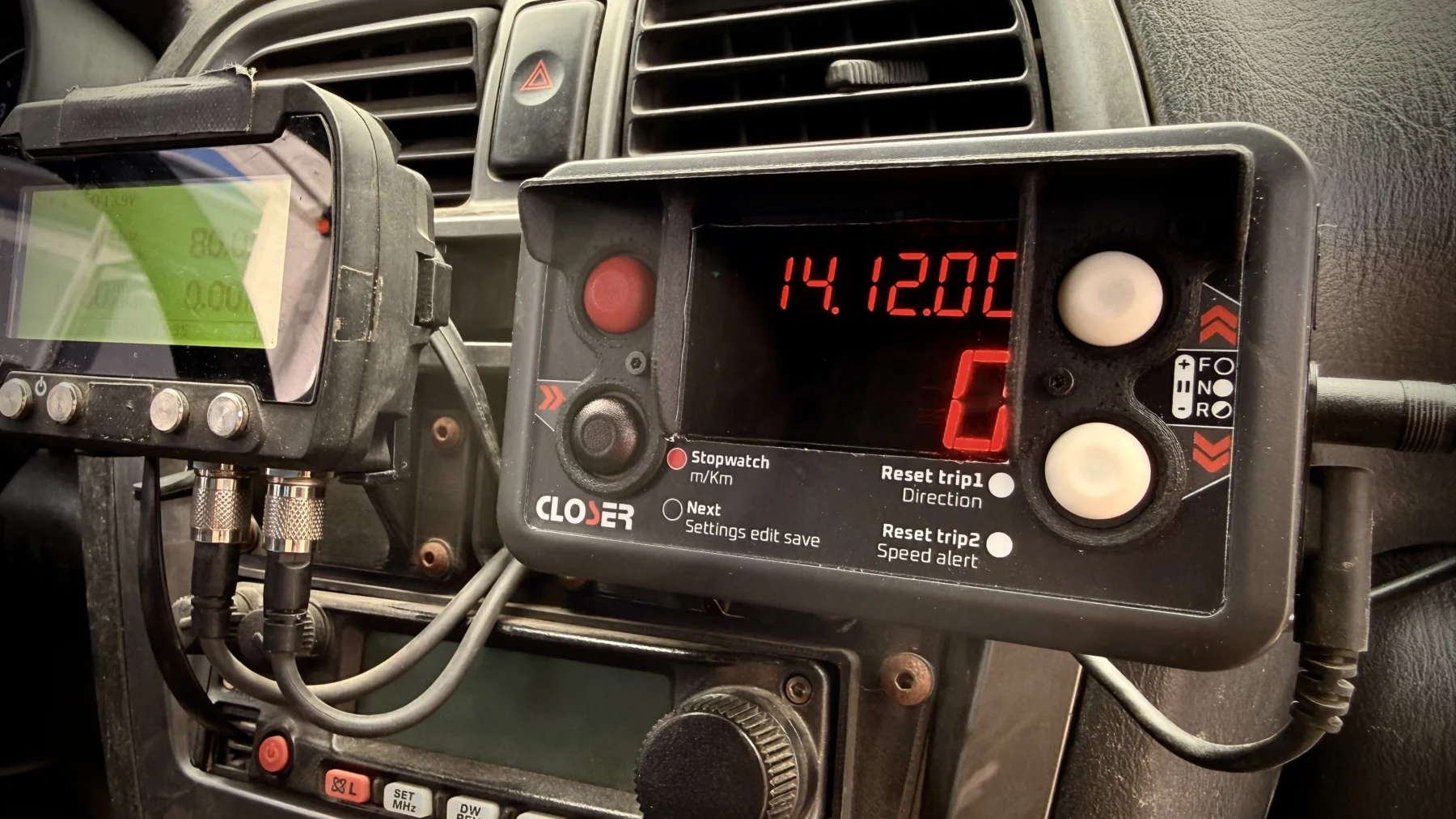
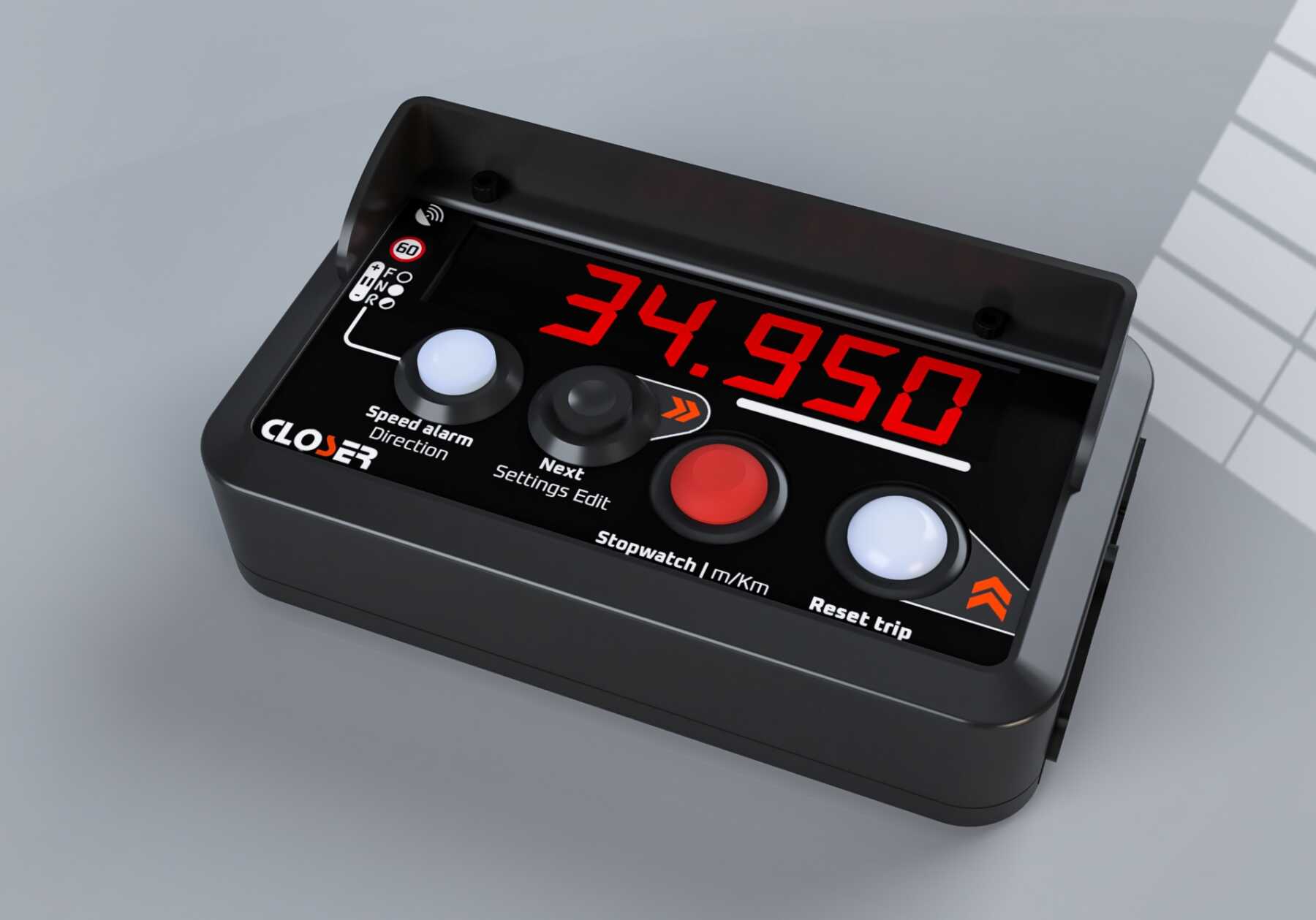
One of the biggest advantages of a physical tripmeter is usability inside the car. During a rally stage or a regularity event, distance corrections often need to be made instantly and without hesitation. A dedicated tripmeter can be connected to remote buttons positioned exactly where the co-driver needs them, allowing quick adjustments without taking attention away from pace notes or the roadbook.
A touchscreen simply cannot offer the same level of control under rally conditions. Vibrations, gloves, sunlight, rough terrain, and constant movement inside the cockpit make smartphone interaction far less practical during competition. Physical buttons provide tactile feedback that allows the operator to work instinctively, even in stressful situations.
Your Smartphone Stays Free
Another important consideration is the role the smartphone already plays during an event. Rally crews rely heavily on their phones for communication, maps, timing, weather information, emergency contacts, and event management.
Using the device as a permanent tripmeter means dedicating it entirely to navigation duties. This often leads to continuous charging requirements, increased battery consumption, and overheating risks. In many cases, teams eventually purchase a second phone dedicated exclusively to rally navigation, which reduces much of the original cost advantage of an app-based solution.
A dedicated tripmeter removes this compromise completely, leaving the smartphone free for everything else while the navigation system performs independently and reliably.
Better Precision and Motorsport Reliability
Precision is another area where dedicated hardware still matters. Smartphone GPS systems are developed primarily for everyday navigation, not for motorsport-grade distance measurement. A professional rally tripmeter is specifically engineered to deliver stable and accurate calculations even in difficult environments.
This becomes especially important when working with pace notes or roadbooks, where even small inaccuracies can accumulate over time and create synchronization errors. In rallying, a few meters can make a real difference.
Dedicated tripmeters are also designed to survive conditions that are far more demanding than normal road use. Unlike consumer smartphones, they are built specifically for installation inside race cars and engineered to withstand vibrations, temperature variations, dust, impacts, and long operating hours.
This is not simply a software difference. It is the difference between a consumer device and a purpose-built motorsport instrument.
Final Thoughts
Tripmeter apps can still be useful for beginners, occasional users, or basic testing sessions. They offer an accessible entry point into rally navigation and can work well in non-competitive situations.
But for crews looking for professional usability, long-term reliability, accurate measurements, and proper integration inside a rally car, a physical tripmeter remains the superior solution.
In motorsport, every component inside the cockpit is chosen for a reason. The tripmeter is no exception.